
 Sign In
Greener synthesis of a CNSL-based corrosion inhibitor via etherification with DEA and Its performance evaluation on mild steel

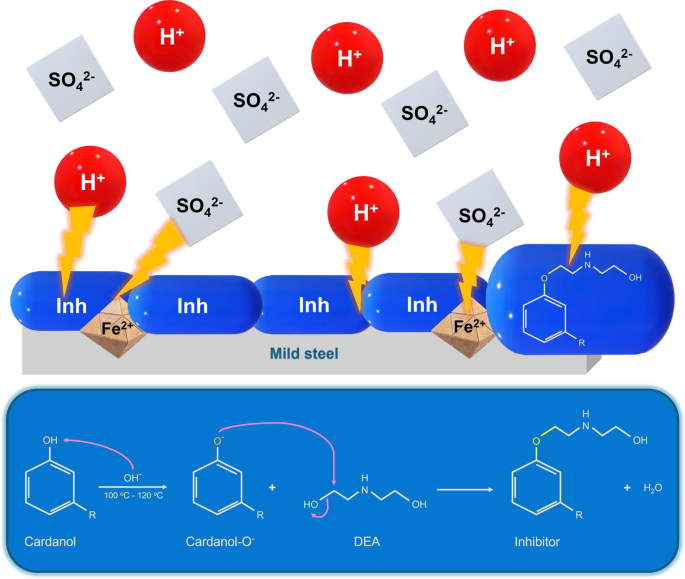
Corrosion of metals is a critical issue across industries such as construction, oil and gas, and chemical processing, leading to reduced service life and significant economic and environmental impacts. Among mitigation strategies, chemical inhibitors are widely used due to their cost-effectiveness. However, synthetic inhibitors often pose health and environmental risks because of their toxicity and non-biodegradability, prompting the search for greener alternatives. Cashew nutshell liquid (CNSL), a renewable by-product of the cashew industry, has emerged as a promising bio-based resource for corrosion inhibition. Yet, its native performance is limited. In this study, CNSL was chemically modified with diethanolamine (DEA) via etherification under alkaline conditions to introduce nitrogen and polar functional groups, enhancing surface adsorption and inhibition efficiency. The resulting CNSL-DEA compound was evaluated on mild steel in acidic media using weight loss, electrochemical, surface, and computational analyses. This work promotes sustainable corrosion control using a valorized agricultural waste.

